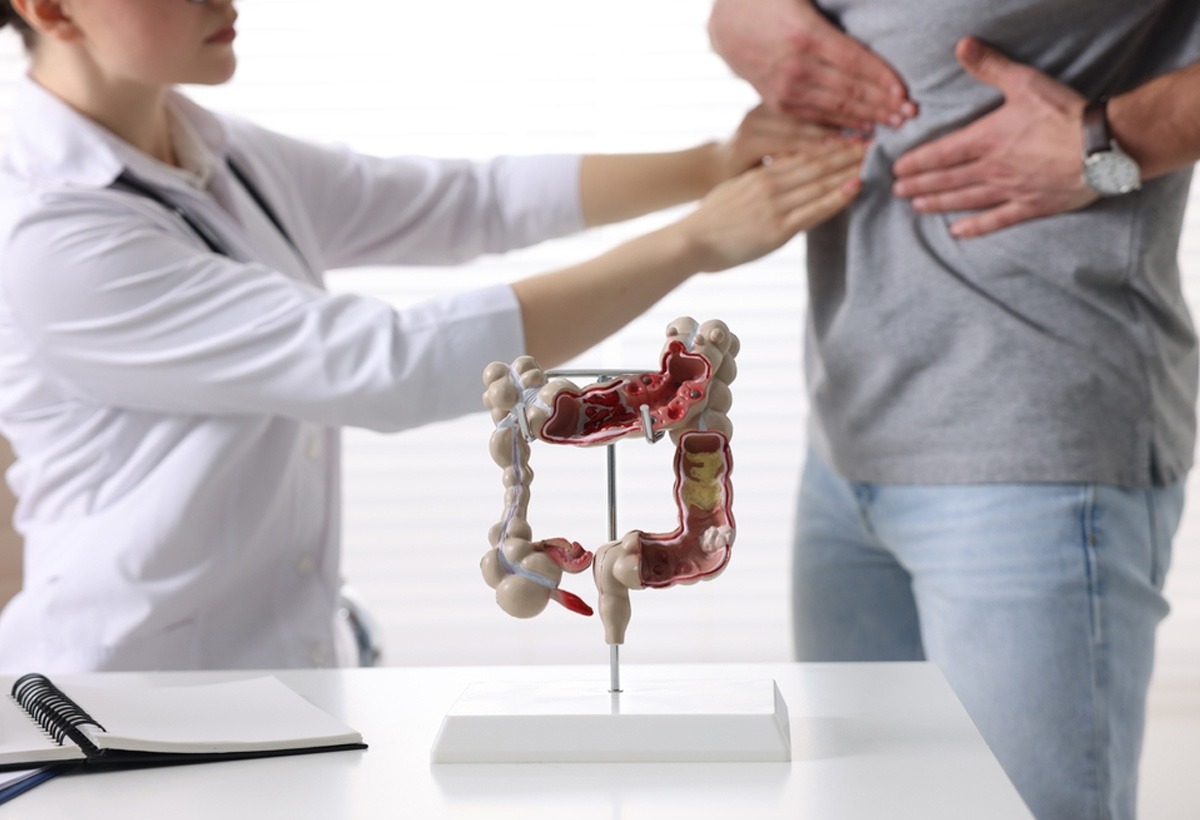
Ulcerative colitis is a chronic inflammatory bowel disease (IBD) that primarily affects the colon and rectum.
Ulcerative Colitis
Ulcerative Colitis: Understanding the Disease
Ulcerative Colitis
Causes & Risk Factors
The exact cause of ulcerative colitis is unknown, but it is believed to involve a combination of genetic, environmental, and immunological factors. Some of the factors implicated in the development of UC include:
Causes & Risk Factors
Genetic Factors
There is evidence to suggest that genetics play a role in predisposing individuals to UC. People with a family history of IBD, particularly a first-degree relative such as a parent or sibling, have a higher risk of developing UC.
Causes & Risk Factors
Environmental Triggers
Certain environmental factors may trigger or exacerbate UC in susceptible individuals. These triggers can vary widely and may include dietary factors, stress, smoking, infections, and exposure to pollutants.
Causes & Risk Factors
Immune Dysfunction
It is believed that UC results from an abnormal immune response in the gastrointestinal tract. In individuals with UC, the immune system mistakenly attacks healthy tissues in the colon and rectum, leading to inflammation and tissue damage.
Causes & Risk Factors
Microbiota Imbalance
Alterations in the gut microbiota, the community of microorganisms residing in the intestines, have been implicated in the development of UC. Disruptions in the balance of beneficial and harmful bacteria in the gut may contribute to inflammation and immune dysregulation.
Ulcerative Colitis
Diagnosis
Diagnosing ulcerative colitis typically involves a combination of medical history evaluation, physical examination, and diagnostic tests. Key steps in the diagnostic process include:
Diagnosis
Medical History
Your healthcare provider will review your medical history, including your symptoms, family history of IBD, and any previous diagnostic tests or treatments.
Diagnosis
Physical Examination
A physical examination may be performed to assess for signs of inflammation in the abdomen, such as tenderness or swelling.
Diagnosis
Laboratory Tests
Blood tests may be ordered to check for markers of inflammation, anemia, and other indicators of UC. Stool tests may also be conducted to rule out infections or other gastrointestinal disorders.
Diagnosis
Imaging Studies
Imaging tests such as X-rays, CT scans, or MRIs may be used to visualize the colon and rectum and evaluate for signs of inflammation, ulcers, or complications.
Diagnosis
Endoscopic Procedures
The gold standard for diagnosing UC is a colonoscopy or sigmoidoscopy, in which a flexible tube with a camera (endoscope) is inserted into the colon or rectum to directly visualize the lining of the intestines. During the procedure, tissue samples (biopsies) may be collected for microscopic examination to confirm the diagnosis of UC and rule out other conditions.
Play Video
Major Symptoms of Ulcerative Colitis
Abdominal Pain
Many individuals with UC experience abdominal discomfort, cramping, and pain, often in the lower left side of the abdomen.
Diarrhea
Persistent diarrhea is a common symptom of UC, which may be accompanied by urgency and an inability to control bowel movements.
Rectal Bleeding
Blood in the stool or bleeding from the rectum is a hallmark symptom of UC, often ranging from mild to severe.
Urgency and Frequent Bowel Movements
The need to urgently empty the bowels, sometimes multiple times a day or during the night, is a common feature of UC.
Fatigue
Chronic inflammation and frequent bowel movements can lead to fatigue and decreased energy levels in individuals with UC.
Weight Loss
Unintended weight loss may occur due to decreased appetite, malabsorption of nutrients, or other factors related to UC.
Ulcerative Colitis
Disease Progression
Ulcerative colitis can vary widely in its presentation and disease course, ranging from mild to severe and from intermittent to continuous symptoms. The progression of UC is characterized by periods of active inflammation (flare-ups) alternating with periods of remission, during which symptoms may improve or resolve completely.
Disease Progression
Types of UC Based on Disease Progression
Disease Progression
Mild UC
In mild cases of UC, symptoms are typically mild to moderate and may include intermittent abdominal pain, diarrhea, and rectal bleeding. Mild UC may be limited to the rectum (proctitis) or involve a portion of the colon (left-sided colitis).
Disease Progression
Moderate to Severe UC:
Moderate to severe UC is characterized by more frequent and severe symptoms, including persistent diarrhea, abdominal cramping, rectal bleeding, and urgency to have bowel movements. The inflammation may involve a larger portion of the colon or extend continuously throughout the colon (pancolitis).
Disease Progression
Complications
Ulcerative colitis (UC) is a chronic disease that can cause a range of complications if left untreated. The main goals of UC treatment are to induce and maintain remission, alleviate symptoms, reduce inflammation, and prevent complications. With proper monitoring and management.